Posts

Warm Up: Repetition & Intention Matter
Image
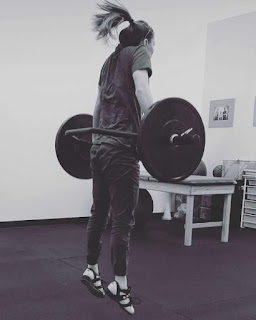
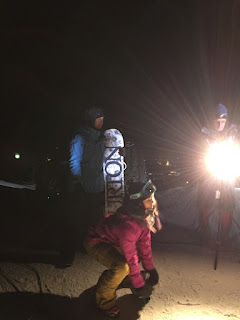
2015. Chloe Kim warms up for a commercial video shoot at 11 pm. It is 20 deg F. I talk explicitly with my athletes about warm up and the importance of taking it seriously. This is specific work that gives us information and it forms the foundation for that particular session. It is not just about raising body temperature or sweating. Nor is it a time for mindless busywork. There will be general things that work for an entire team; but there will also be things that are specific to the individual athlete. It is important to allow each athlete to have input into their warm up. Personal accountability here helps develop good overall habits and lays the foundations for a lifetime of using movement for self-care. Intentional effort is important. This is the time where one learns to become "in tune" with the body and its potential physicality. The only way to do this is to work through a variety of movements, repeatedly, over time. These experiences allow you to choose those moveme...

Rewind: Foundational Leg Strength in Rehab

Image
I am reviewing things for a new project and this blog post from April 2020 has some things I want to keep in mind. Thought I would share it again. Might prompt some good reflection for the physio crowd. ----- Last week Donie Fox had a great article for HMMRMedia --  "Using Foundational Legs Exercises as the Cornerstone of Rehabilitation."  Check it out if you haven't already. Donie's article is important in my mind because it addresses a critical issue in the rehab world. There is a serious lack of appreciation for and mastery of the use of basic movements (squats, lunges, step ups) to build foundational lower extremity strength. Donie and I have decided to go into more depth on this topic in our next few podcasts. We will also hopefully touch on return to running programming criteria. Here are some barriers, in my opinion, to rehab professionals adopting a "foundational legs" approach. I'm not trying to be overly critical or a curmudgeon here. I am simp...

Pearl for Practice: Overhead Work with the Barbell

Image
  I don't ever remember being intimidated by overhead lifting. I was lucky to get expert instruction early in my career. But there are many sport and medical professionals who are unsure of the safety of lifting overhead. Some are adamantly against it. Bilateral work with a bar, overhead and behind the head, is advanced and demands full ROM. It doesn't require extra ROM, but it does require normal, full ROM. Athletes and non-athletes who do not have normal, full shoulder ROM clearly need to do more remedial, single-arm overhead work. Everyone needs to earn the right to do advanced movements. Many just need to take some time to find the motion they actually have; if you haven't put your hands over your head very often, you probably don't know what you are capable of doing. But let me be clear: I've worked with many people who never ever need to use a barbell. I did what was appropriate and necessary for their needs, not my ego or somebody else's idea of what...

Practitioner Reboot: The Outdated Concept of "Core" Work

Image
 "We did core today."  That phrase makes me furrow my brow and chuckle at the same time. I suppose it is a vestige of bodybuilding and assigning body parts to workouts. We can do better for our athletes if we evolve our mindset and programming to think beyond the isolated torso. And that black hole of training called "stability." If you must give a session or a part of a session a name, I'd like to suggest an alternative framework. We'll stay on the "c" theme, but start from a foundation of movement, not stillness. To do this, I ask you to leave behind ideas of isolating and activating torso muscle groups. Embrace the terms connection, coordination and control. --- Most of life (and sport, for that matter) are not still.  In archery, biathlon, gymnastics or rowing, the stillness we observe is part of one or many transitions from one posture to another. The athlete demonstrates significant control and coordination for a relatively short time; moving...

Resistance Training Practical: Using Pulls Effectively

Image
Pulls -- high pulls and straight arm pulls -- are staples of the competitive weightlifter. Non-weightlifting athletes also use them to compliment things like medicine ball throws. Over the years, I have moved away from barbell pulls, especially high pulls, for non-weightlifting athletes. This may seem like picking nits. However, my job is to bulletproof athletes. I work hard to do it with the least additional joint wear and tear possible, while keeping things simple. First, I don't like the idea of promoting any type of arm pulling if we are going to do any power cleans or power snatches in the future. Arm pulling is the opposite of what we want with these movements.  Second, it is a skill to hold, accelerate, decelerate and lower a barbell when doing pulls. There is a significant anterior load and traction on the upper traps and long thoracic nerve that must be controlled, particularly when you lower the bar. (Thank you Joe Pryztula for reminding me of this!) Most weightli...

Foundational Legs: Reflections before an Upcoming Podcast

Image
Last week Donie Fox had a great article for HMMRMedia -- "Using Foundational Legs Exercises as the Cornerstone of Rehabilitation." Check it out if you haven't already. Donie's article is important in my mind because it addresses a critical issue in the rehab world. There is a serious lack of appreciation for and mastery of the use of basic movements (squats, lunges, step ups) to build foundational lower extremity strength. Donie and I have decided to go into more depth on this topic in our next few podcasts. We will also hopefully touch on return to running programming criteria. Here are some barriers, in my opinion, to rehab professionals adopting a "foundational legs" approach. I'm not trying to be overly critical or a curmudgeon here. I am simply trying to share my observations after 20 years of working at all points on the rehab and performance spectrum. Ok, here goes. 1.  "Protection" mindset vs "performance" min...

Spectrum Squat Variations

Image
In support of my HMMRMedia article today , I wanted to give people a look at some of the Spectrum Squat variations I have used -- and show athletes doing them in actual training sessions. The athletes featured are Morgan Northrop (US national team, aerials skiing, 5' 6" and 128 lbs), Eli Kimche (high school senior, golf, 6' 4") and Nolan Berry (high school senior at the time, basketball, 6' 10" and 220 lbs). The video quality isn't super high, but this is the real deal, flaws and all. Morgan and Eli do a fantastic job of using their full range of motion. Eli is doing is first ever Spectrum Squats in these videos and is learning to rack the KBs. He only has KBs at home so we work with what we have during the COVID -19 times. Morgan is a pro at Spectrum Squats and has used them to their fullest throughout every training year. The video of Nolan is for all of you working with tall, somewhat inflexible athletes. I worked with Nolan...